
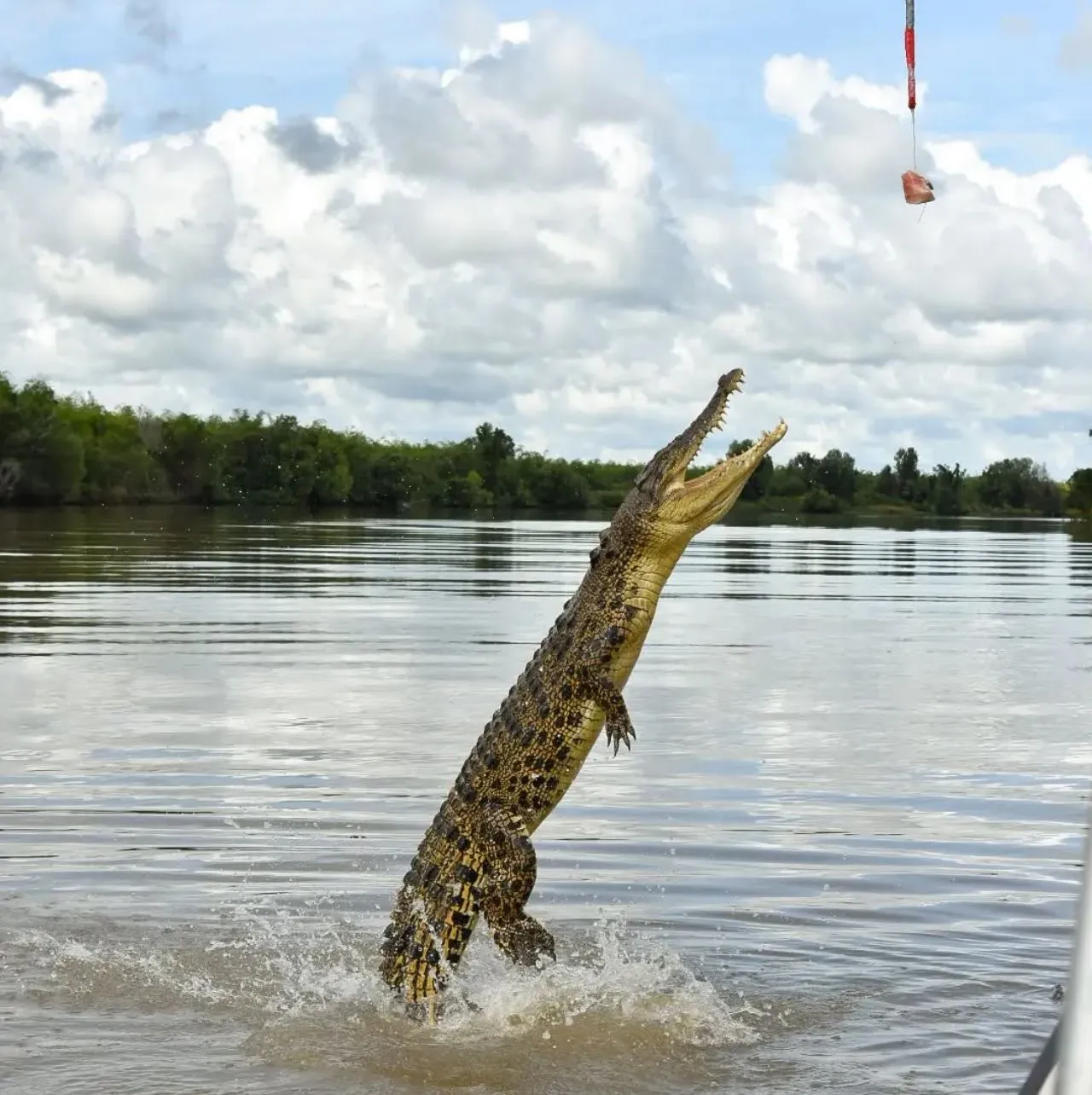
Are there local tips on the best time to photograph croc jumps? Absolutely, and after years of guiding tourists around the Northern Territory, I’ve learned that catching a Saltwater Crocodile in mid-air is not just a matter of luck – it’s about timing, patience and getting a feel for the rhythm of the Adelaide River. When you join a Jumping Crocodile Cruise – or book one from Darwin – you soon discover that the Top End rewards those who are happy to take things easy and actually pay attention to what the river’s trying to tell us.
The crocs you see are not just props; they’re wild animals, totally unpredictable and bloody amazing in the way they behave. So if you’re after that ultimate wildlife encounter or just want to impress your mates with a fantastic shot of pure power, you’ll want the inside knowledge that a local expert has to share.
Why Crocs Leap: Get Better Shots
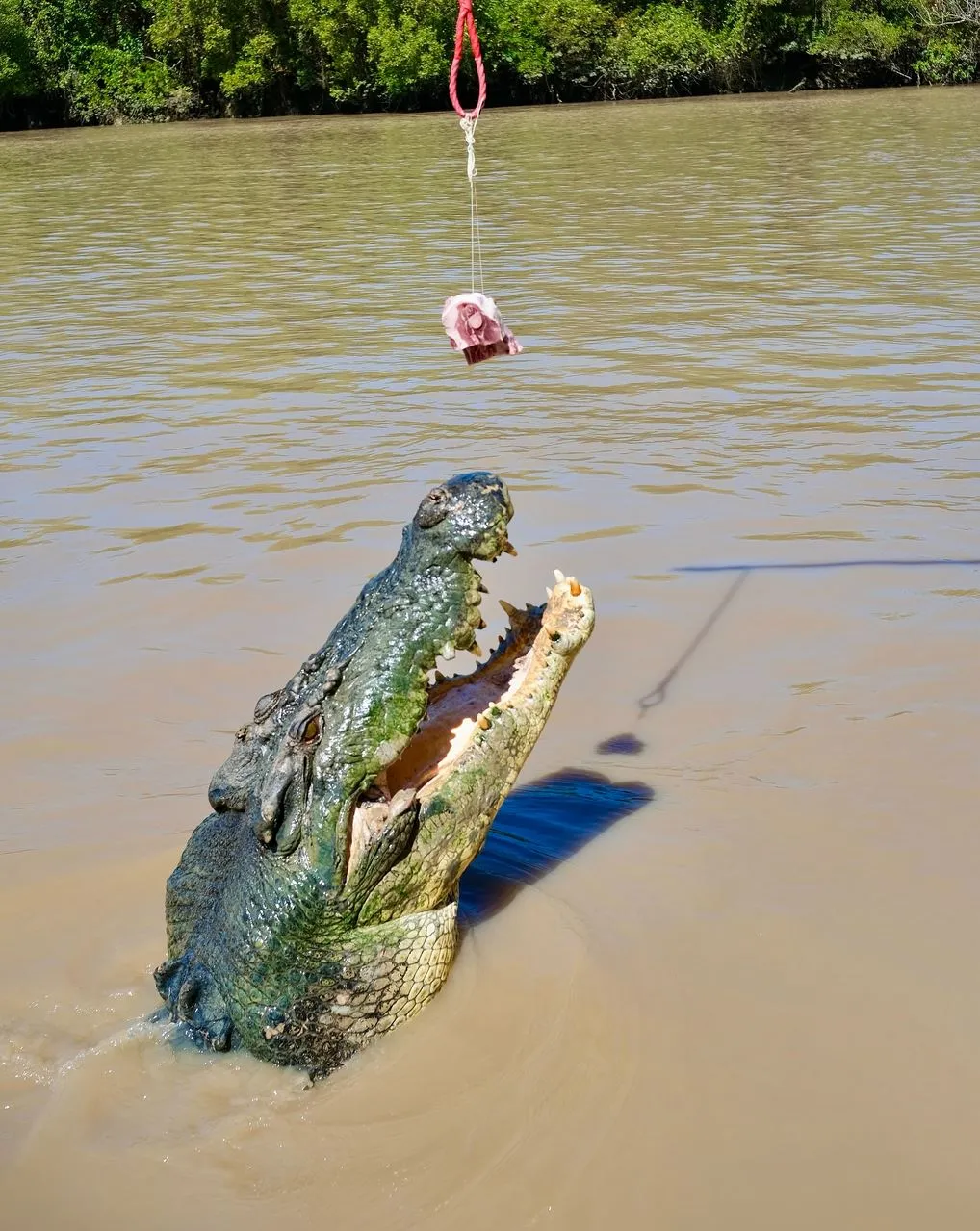
A crocodile doesn’t actually jump up in the air “just for fun”. What you see is a glimpse of their natural behaviour – the instinct to hunt and catch prey. In the Adelaide River area, it’s not always easy for a crocodile to find food floating along – sometimes it’s stuck up in a tree, courtesy of birds or other carrion. So, that vertical strike is like a natural reflex – a pretty clever trick that’s been honed over time.
What this means for you:
- They tend to jump highest when hungry — it’s usually early morning when you’re most likely to get a great shot.
- You can forget it if it’s hot and humid – the late wet season is pretty rubbish for both crocs and tourists.
- There are some crocs out there that are real show-offs – guides know them by their scars, or the shape of their jaws.
When you go on a Jumping Crocodile tour, make sure you listen to the wildlife expert who’s doing the commentary. Their knowledge of crocodile behaviour can make the difference between a cracking shot and just staring at the water looking for something – anything – to happen.
Best Time for Croc Photos
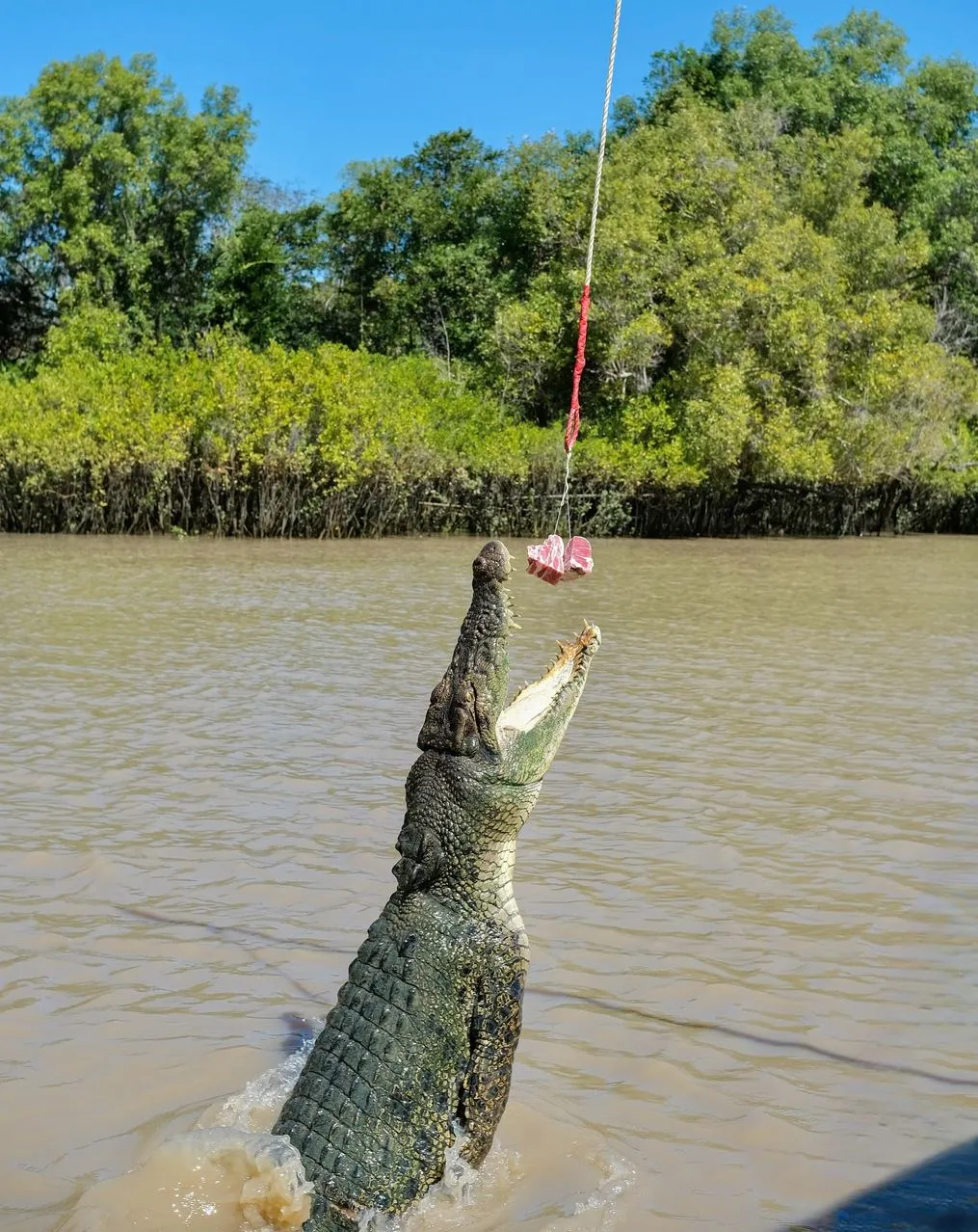
You want to know when the best time to capture a crocodile in mid-jump is? Well, the answer is, more often than not, it’s the first thing in the morning.
Where Morning Light & Chill Water Are The Key
The moment the water cools down, your chances of getting some enthusiastic, action-packed crocodile shots increase dramatically. And while the sun is still low in the sky, it casts a gentle glow over the scene, washing out any harsh shadows and making the colours look crisp & clean.
Afternoons Can Bring a Dazzling Contrast
If you’re after a more dramatic shot with warm tones, long shadows and that beautiful Aussie heat haze, afternoon cruises can produce some seriously captivating images. Just don’t forget to bring some sunscreen!
Midday? Yeah, It’ll Do in a Pinch
We’re not going to sugarcoat it: midday cruising can be a real challenge. The sun beats down, the river surface goes bright white with glare, and it’s just plain hot. But if that’s the only time slot you’ve got, a skilled photographer can still work some magic.
| Cruise Time | Croc Activity | Lighting Quality | Comfort Level | Ideal For |
|---|---|---|---|---|
| Morning | High | Clear & Balanced | Cooler | Action shots |
| Midday | Medium | Harsh & Reflective | Hot | First-timers |
| Afternoon | Medium–High | Warm & Dramatic | Warm | Creative lighting |
Source: Tourism NT Visitor Survey, 2023 – The Time To See Wildlife On Your Jumping Crocodile Cruise From Darwin
If you’re planning a Jumping Crocodile Cruise from Darwin, then it’s worth knowing that you’re most likely to spot wildlife on the earlier cruises.
Camera Settings for Croc Shots
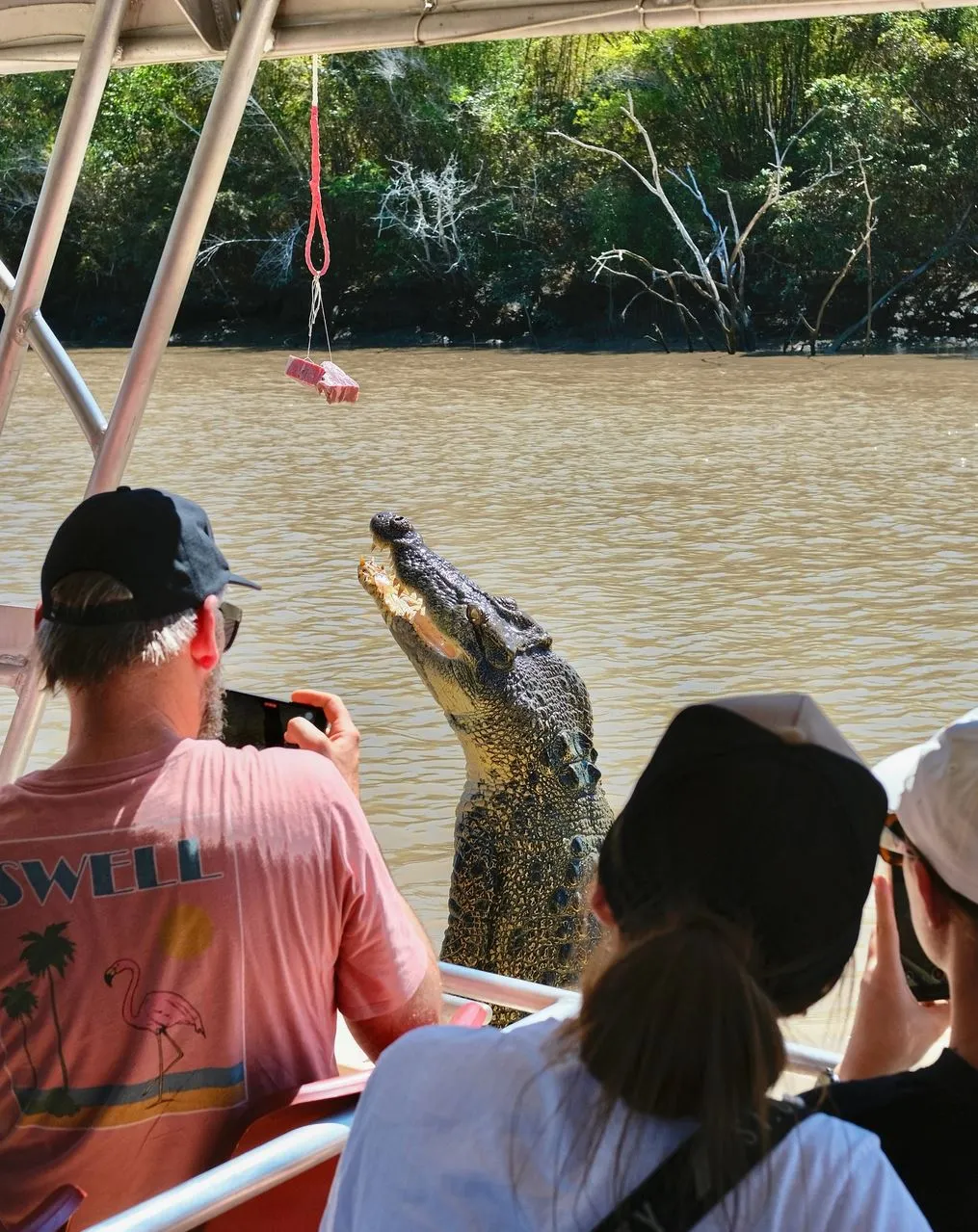
You don’t need to splash out on a $10k lens to get a great shot of a jumping croc – but you do need to get your camera settings right.
Getting The Shutter Speed Right: It’s Go Fast Or Go Home
Go for 1/1000th of a second or faster. The croc jumps, the bait swings, and the birds take flight – it all happens a lot quicker than you’d think.
Aperture: Finding The Magic Zone
Shoot between f/5.6 and f/7.1 to keep your croc sharp, and the riverbank blurred out behind it.
Remember To Use Burst Mode – It’s Not A Crime!
Wildlife doesn’t always pose for photos – it erupts. Using burst mode gives you many frames to work with.
A Few Tips For Your Lens
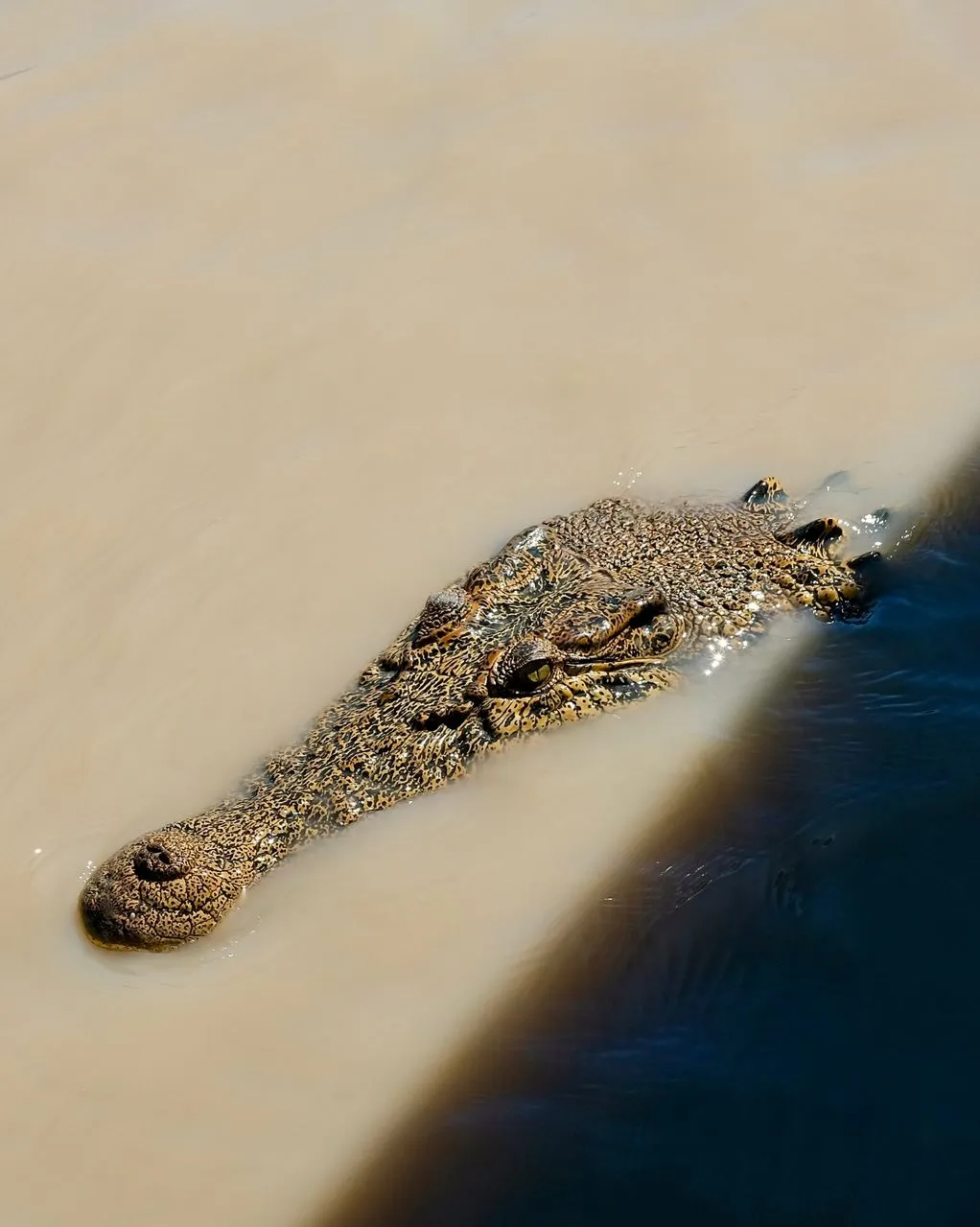
- If you’ve got a 70-200mm lens, then you’re all set for wildlife shots
- A 24-70mm lens is actually a good option if you’re on the lower deck and feeling brave
And here’s a handy tip to remember:
“If you’re heading out on a Jumping Crocodile Cruise from Darwin, make sure you switch to burst mode as soon as you board the boat – before it even leaves the ferry crossing.”
Best Spot on the Boat for Croc Shots
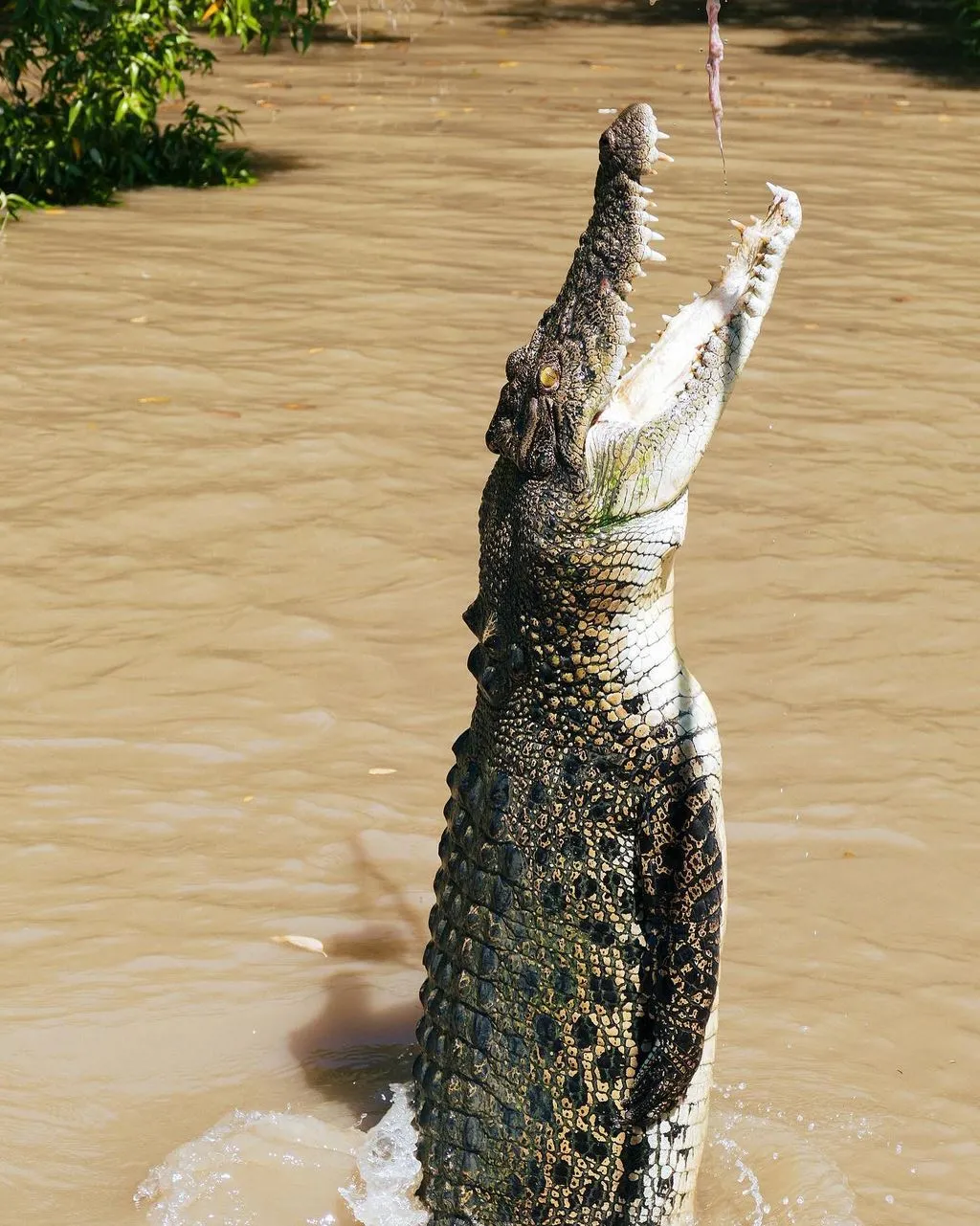
Most people just rush to the railing and plant themselves there – but the secret to getting that special crocodile jumping moment is actually pretty simple: follow the bait pole.
Where the guide goes – that’s the spot to be – safely, of course.
The Insider Spots
- Right opposite the bait pole for full-body leaps
- A little way back from the edge to stop your perspective from getting all cropped
- And don’t be one of the crowds – go somewhere a bit quieter so you don’t elbow someone in the side
The Rookie Blunders To Avoid
- Standing right over the pole – you’ll only get a shot of the croc’s head
- Fiddling with your lens all the time – by the time you swap, the croc will have gone back into the water
- And for goodness sake – don’t shoot into the sun – unless you want a silhouette
Other Wildlife Worth Photographing
The Top End runs on two rhythms: the Wet and the Dry. Both offer unique wildlife experiences, but they’re as different as chalk and cheese for photographers.
Dry Season (May – October)
- Water clarity that’s crystal clear
- Crocs is moving in a way that’s easy to predict
- Being on one of those undercover boats means you can stay comfortable no matter what the weather’s like
- Loads of Aussie wildlife hang out near the water’s edge this time of year – you’ll see white-bellied sea eagles zooming overhead, for starters
- This is when most tour operators – such as Jumping Crocodile Cruise and other companies offering crocodile cruises – schedule multiple trips. You can join at any time.
Wet Season (November – April)
Think dramatic skies and life-or-death monsoons. It’s a wild time of year. Crocs are on the move, but they’re not always easy to track. You might even end up booking a trip and then having to reschedule because of some wicked storms that roll in.
But don’t get me wrong – the colours of the Wet are just amazing. Your camera will thank you.
If you do end up on a Jumping Crocodile Cruise from Darwin in the Wet, best check the tour operator’s schedule really carefully – storms can pop up out of nowhere and put a pause on things for safety’s sake.
Travelling Through Someone Else’s Backyard
The Adelaide River region has loads of cultural significance to the local Aboriginal communities – stories and teachings that relate to crocodiles as much as to their strength and place in the world. Good tour operators will provide that context as part of your trip – it’s not about magic tricks; it’s about showing respect and reminding you that you’re not just watching wildlife – you’re actually in a living, breathing landscape with its own rhythm and history.
So if you are travelling through someone else’s backyard – show some respect, will you? Listen to the story. Please take it in. Don’t litter and don’t leave any crap behind.
More Wildlife to Photograph
A Jumping Crocodile Cruise isn’t just about Saltwater Crocodiles, you know. There’s loads of other stuff to look out for – including:
- Freshwater crocodiles are lounging in the sun on a log somewhere
- Sea eagles and kites are doing their thing high up in the air
- Goannas slinking around like ghosts on the riverbank
- Dozens of bird species flit about near the floodplains
- And loads of other Aussie wildlife that use the river as a lifeline
Sometimes what grabs the camera is the bird life – especially that white-bellied sea eagle swooping in out of the sun like it owns the place.
Keeping Your Head in Photographing Crocs
Thing is, travellers really need to hear this: photographing crocodiles feeding is thrilling, but the animals are a force to be reckoned with – they can snap a buffalo bone just like it was a dry baguette
A few pretty key rules to keep in mind:
- never lean over the rail – it’s just not worth it
- make sure all your gear is secure – no dangling cameras for crocs to enjoy
- do exactly as the crew tells you – they’ve seen things you don’t even want to think about
- undercover boats and air-conditioned comfort are there for a reason – the heat can catch up with you a lot faster than you expect
Every single tour operator in the area puts a significant emphasis on safety, because out on the Adelaide River, you either show some respect for the crocs or you find out the hard way
The River Has a Mind of Its Own
The Adelaide River doesn’t do ‘on schedule’. The crocs don’t do ‘on command’. That’s why photographing them is such a wild and exhilarating experience.
Get your timing right, choose the right boat, get into the right spot, and then trust what your wildlife expert says – the river will do the rest
And if you want a hassle-free experience, a Jumping Crocodile Cruise straight from Darwin is a great way to see the Top End’s most fearsome locals with minimal fuss
FAQ
What time of day is best for snapping croc jumps? Morning light is best, and the crocs are generally most active
Is a crocodile jumping tour safe for photographers? As long as you follow the crew’s instructions and stay safely behind the railings, yes
Can I photograph Freshwater Crocodiles as well? absolutely – they’re more petite, less feisty, and often just bask in the sun on logs
Do all the cruises guarantee you’ll see crocodile jumps? can’t promise animal behaviour, but the Adelaide River’s got some of the most reliable sightings in Oz
What camera lens is best for capturing those croc jumps? A 70-200mm zoom does the job, but ideally a 24-70mm is better for getting up close and personal